

Call for Submissions is
Coming Soon!
The IEEE EMC Society is seeking original, unpublished papers covering all aspects of EMC and technologies that are affected by EMC.

Join us IN-PERSON in Portland, Oregon. Share your insight, ask questions, learn from the experts/innovators and see new products at the 2027 IEEE International Symposium on Electromagnetic Compatibility, Signal & Power Integrity. Your published paper will be seen by thousands in the EMC community and across the wide array of disciplines that look to the IEEE EMC Society for technical guidance. In addition, your paper will be uploaded to IEEE Xplore® and receive the exposure and recognition that brings.
The Committee’s Proposed Special Topic Areas:
Chip-level EMC; Urban Air Mobility (UAM) and EMC requirements; Emerging EMC challenges in Military and Space applications; EMC and SIPI for Data Centers and High-Speed Interconnect; AI/ML application to EMC and SIPI problems
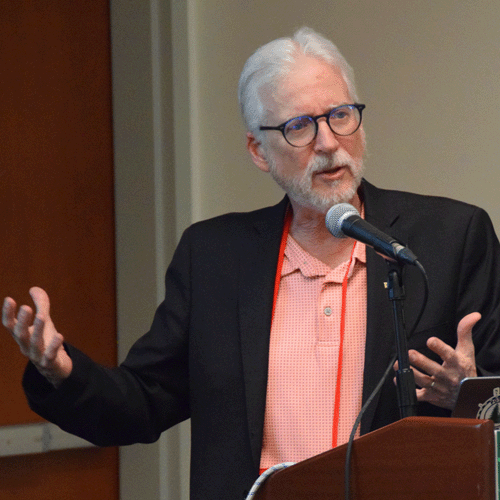
Technical Papers
are high-quality, peer reviewed papers presented in a 20-minute oral briefing with charts from a projector & computer plus a 10-minute question & answer period.

Special Sessions
are unique and dedicated sessions on a specific topic with 4-6 page Traditional Papers. Each paper presents a facet of the specific topic. These sessions can be created by working with the Technical Committees. If interested, you should discuss this with one of the Technical Committees to act as the sponsor.

Abstract-Reviewed Papers
are an alternative to the 4–6-page Traditional Paper that enables Authors to present their work without the burden of writing a full manuscript. Abstract-Reviewed Papers have a later submission deadline and only require an extended abstract (approximately one page in length).
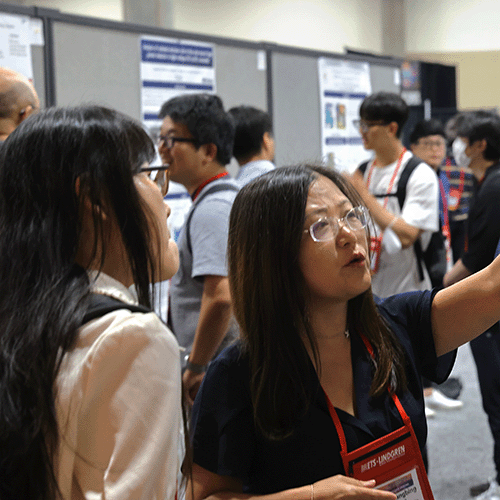
Poster Papers
are Traditional Papers for which the Author chooses to present their work in an interactive, poster session instead of the typical classroom style presentation.
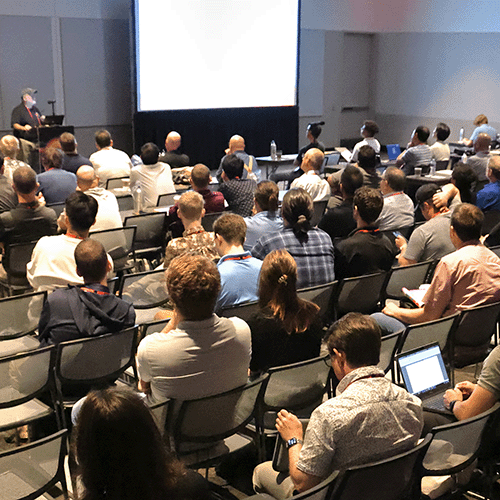
Workshops & Tutorials
are an option for authors covering a fundamental topic, a complex project, or a large dataset. Presentation proposals are submitted instead of a journal paper, and presentation materials (PowerPoint slides) are collected after the proposal is accepted.
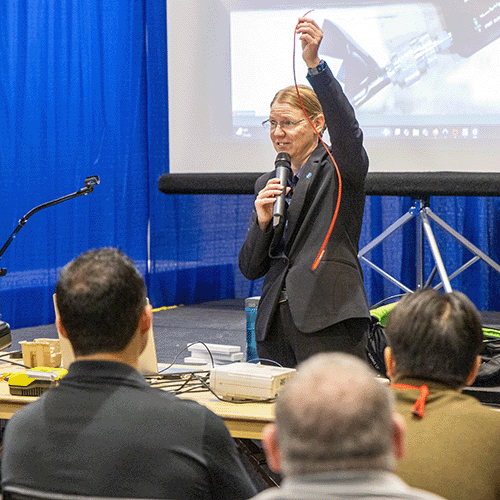
Experiments & Demonstrations
are for contributors who prefer to share their work as live experiments or demonstrations.
TOPICS OF INTEREST
TC-1 EMC Management
- Personal & Laboratory Accreditation
- EMC Education & Awareness
- Legal Issues
TC-2 EMC Measurements
- Techniques
- Test Instrumentation & Facilities
- Standards and Regulations
- Measurement Uncertainty
TC-3 EMC Environment
- Signal Environment
- Atmospheric & Manmade Noise
- Characterization
TC-4 EM Interference Control
- Shielding
- Gaskets
- Cables
- Connectors
- Grounding & PCB Layout
TC-5 High Power Electromagnetics
- ESD & Transients
- EMP
- IEMI & Lightning
- Geomagnetic Storm EMC
TC-6 Spectrum Engineering
- Characterization and Modeling
- Design
- Adaptive Interference Mitigation
TC-7 Electrical System and Power Electronics EMC
- Power EMC
- Conducted Emissions and Immunity
- Power Conversion
- Transportation & Electrical Vehicles
- Grid
TC-8 Aeronautics and Space EMC
- Aircraft
- Atmospheric Environment
- Drones
- Spacecraft
- Missiles
TC-9 Computational Electromagnetics
- Modeling & Simulation
- Multi-Physics Techniques
- Tools
- Applications
TC-10 Signal and Power Integrity
- Interconnects
- Modeling & Characterization
- Crosstalk
- Jitter
- Noise
TC-11 Nanotechnology & Advanced Materials
- Nanomaterials & Nanostructures
- Smart Materials
TC-12 EMC Wireless Technologies
- EMC Planning/Testing/Specifications
- Wireless Coexistence
SC-3 Machine Learning and Artificial Intelligence in EMC and SIPI
- Deep Neural Networks
- Support Vector Machines
- Gaussian Process Regression
- Bayesian Optimization
KEY DATES
| NOVEMBER 20, 2026: Submission Deadline for Special Session Proposals |
| DECEMBER 20, 2026: Submission Deadline for Traditional and Special Session Papers |
| JANUARY 15, 2027: Submission Deadline for Workshops & Tutorials and Experiments & Demonstrations Proposals |
| FEBRUARY 5, 2027: Notification of Acceptance/Rejection for Traditional and Special Session Papers |
| FEBRUARY 19, 2027: Submission Deadline for Abstract-Reviewed Papers |
| FEBRUARY 19, 2027: Notification of Acceptance/Rejection for Workshops & Tutorials and Experiments & Demonstrations |
| MARCH 5, 2027: Submission Deadline for Revised Traditional and Special Session Papers |
| APRIL 8, 2027: Notification of Acceptance/Rejection for Traditional, Abstract-Reviewed, and Special Session Papers |
| MAY 7, 2027: Submission Deadline for Final Papers and Workshop & Tutorial Presentations (Registration Required) |
GUIDELINES FOR AUTHORS AND SESSION ORGANIZERS
TRADITIONAL PAPERS
A preliminary manuscript (4 – 6 pages), including all relevant results and conclusions.
ABSTRACT-REVIEWED PAPERS
An extended abstract (one page), including relevant results and conclusions.
SPECIAL SESSIONS
A proposal that includes:
• Primary and secondary audience
• Title of Special Session
• Abstract detailing the content of the session
• Statement of what makes the session special
• List of planned authors and paper subjects with titles, if available
WORKSHOPS & TUTORIALS
A proposal that includes:
• Title of Workshop or Tutorial
• Format: Workshop or Tutorial
• Abstract describing the workshop/tutorial, including objectives, content, and novelty
• List of planned presenters and affiliations with topics/titles
• Primary and secondary Audience
EXPERIMENTS & DEMONSTRATIONS
A proposal that includes:
• A detailed listing of any test equipment required
• Title of Experiment or Demonstration
• Abstract describing the experiment or demonstration with sufficient detail for the chairs to review
• List of presenters and affiliations
EMC Society policy is that commercialism shall be prohibited in all workshops and technical sessions. This applies to the written paper or notes as well as any presentation format.
All paper and proposal submissions must be uploaded into the Review System using the link provided on the symposium website (2027.emcsipi.org) beginning October, 2026. During the electronic submission process, a unique author code is created for tracking purposes. Failure to comply with submission requirements may result in rejection. Presentations (30 minutes total) for Traditional, Special, and Abstract-Reviewed Papers will be a 25-minute LIVE presentation in-person followed by a short question and answer period. Times will vary for Workshops and Tutorials based upon the number of presentations in any given session. Further details will be communicated to the authors
CRITERIA FOR PAPER ACCEPTANCE
Paper Acceptance Procedures & Criteria
Paper acceptance will be based on the following criteria:
- Importance of Topic: Does it have direct significance to the EMC, Signal and Power Integrity community?
- Technical Sophistication and Depth: Does it present information that is a significant contribution, advancement, application, or refinement of the state of the art? Does it expose the reader to a higher knowledge level than currently available from other sources? Is it clear that the work has been substantially completed or is the submission an interim progress report on a long-term project?
- Readability, Clarity, and Presentation: Is the value of the submission clearly defined? Is the material written in clear and concise English with topics presented in an organized and logical manner?
- Novelty and Originality: Does it propose a new, unique, and unpublished concept or expand on an existing premise from a unique point of view? Does it present new information on an EMC, Signal or Power Integrity issue that is still in the developmental stage? Note: Authors should only submit original work that has neither appeared elsewhere for publication, nor which is under review for another publication. If authors have used their own previously published work(s) as a basis for a new submission, they are required to cite the previous work(s) and very briefly indicate how the new submission offers substantive novel contributions beyond those of the previously published work(s). (PSPB 8.2.1.B.11)
STUDENT CONTESTS
STUDENT PAPER CONTEST
Graduate and undergraduate authors are eligible for the Best Student Paper contest. The student must be the primary author and should indicate that they wish to be considered for the contest when submitting the preliminary manuscript. Each student’s professor will be asked to certify that the paper is primarily the work of the student. It is expected that the co-authors of student papers will be limited to those who provided DIRECT contributions to the paper; in general cases the limit is no more than six authors total, including the student.
STUDENT HARDWARE DESIGN CONTEST
A Student Hardware Design contest is also being held. Undergraduate, Graduate, Ph.D. Students at university/college are eligible to participate in the contest. Topics and other details will be available on the symposium website.