Keynote Presentations
INTRODUCING THREE KEYNOTE PRESENTATIONS DURING EMC+SIPI 2026!
Three renowned speakers join us for the EMC+SIPI 2026 Symposium to share their expert knowledge and first-hand experiences in the pursuit of education and a chance to share their passion in EMC and SIPI which has sparked profound technological advancements in the field. Learn about each speaker and their unique achievements.
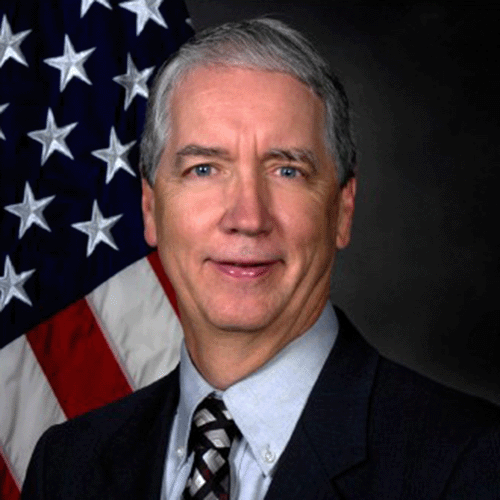
Was it the Radar? Respectfully Revisiting the 1967 US Navy USS Forrestal Carrier Disaster
Brian M. Kent
Ph.D., Fellow, IEEE, AMTA, Private Consultant, RF/EO/Technology, Centerville, OH, USA
ABSTRACT
In 1967, while on patrol in the Gulf of Tokin, the United States Navy Carrier USS Forrestal (CVA-59) was preparing for wartime missions over North Vietnam. At 10:45 am local time, the ship was preparing to launch more than 20 fully armed A-4 Skyhawk and F-4 Fighter jets, all fully fueled and armed with a mixture of iron bombs and Zuni rocket launchers. At 10:51 am, an un-commanded F-4 Zuni Missile launched on the deck, striking a neighboring A-4 and starting a fire and series of secondary explosions. Quenching the fire nearly capsizes the ship, which is ultimately saved through the heroics of the sailors who served aboard the Forrestal. Although the US Navy conducted an extremely thorough accident investigation, hundreds of follow-up technical articles in the aerospace and NASA literature, including current EMI design books, blamed the initiation event on EMI from on the on-board AN/SPS-43VHF search radar. But is that what really happened?
This presentation is aimed at correcting the record regarding the accident’s root cause. It is with great reverence that I humbly dedicate this work to the families, relatives, and friends of the 134 Sailors killed and 167 severely wounded on July 29, 1967. The bravery and heroism of the surviving sailors who risk their lives to save 5,400 souls by quenching the fire and preventing the carrier from capsizing cannot possibly be overstated.
BIO
Dr. Brian M. Kent is an independent aerospace consultant living in Centerville, Ohio. In addition to a long engineering career, he has a life-long personal interest in US Naval Aviation Carrier history, and has read hundreds of books about carrier operations from the 1st Carrier Langley through modern aircraft carrier deployments.
Dr. Kent continues to serve as Adjunct Professor of Electrical Engineering with Michigan State University’s Department of Electrical Engineering. He is a Life Fellow of the Institute of Electrical and Electronics Engineering and an international IEEE Distinguished Lecturer for the Antenna and Propagation Society. He is also a Fellow of the Antenna Measurement Techniques Association and of the Air Force Research Laboratory (AFRL). In 2009, he received the Meritorious Presidential Rank Award.
Dr. Kent was on the Space Shuttle Columbia Accident Investigation Board Technical Staff in 2003 and has lectured and written extensively about that accident. He also co-led Ascent Debris Radar development for the Shuttle’s return to flight operations, and personally served on the radar ground staff for four shuttle missions.
Previously, Dr. Kent was a member of the scientific and professional cadre of senior executives as Chief Technology Officer, AFRL, Wright-Patterson Air Force Base, Ohio. He served as AFRL’s principle scientific/technical advisor and primary authority for the technical content of the Science and Technology Portfolio. He evaluated the total Laboratory technical research program to determine its adequacy and efficiency in meeting national, DoD, USAF, AFMC, and AFRL objectives in core technical competency areas.
Dr. Kent’s specialties include EM Scattering and Material Property Measurements, Radar, Antenna, and Radar Cross Section Measurements, Radar Performance Evaluation, and RF/EO Sensing technologies. He also worked for Applied Research Associates (ECD, Fairborn, Ohio office) as Senior Scientist and S&T Lead for Electromagnetics (EM), Radio Frequency (RF), and Sensing Systems.
Dr. Kent is an avid cyclist having biked more than 11,500 miles since 2018. He also plays the piano, and excels at astrophotography, especially lunar and solar eclipse photography. When it’s cold and cloudy, he moves indoors and enjoys working with his 208 ft2 O-Gauge train layout.
Dr. Kent wishes to thank the IEEE, the Antenna Measurement Techniques Association and In Compliance Magazine for inspiring him to write and present this work nationally.
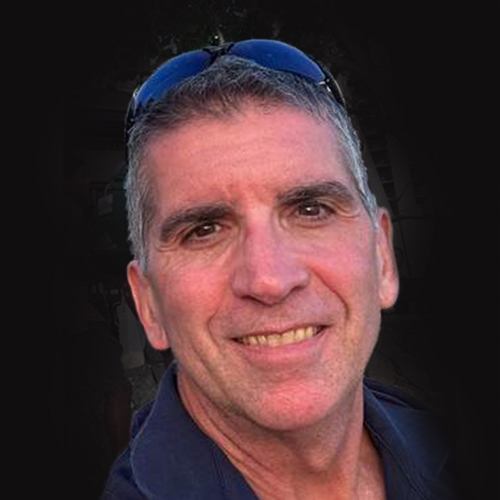
400+G per Lane Pluggable I/O Interface Signal Integrity Challenges & Design Considerations
Howard Heck
TE Connectivity
ABSTRACT
This presentation discusses the signal integrity related challenges that the industry faces as we scale pluggable I/O interfaces to 448G. We will begin by outline desired electrical characteristics (insertion loss, reflections crosstalk) for passive channels. We then describe the ways in which physical structures and manufacturing consider may limit the scalability of existing channel component and discuss the implications on the choice of modulation scheme for 448G operation. The limitations suggest that new approaches are needed, and we will describe one such approach that can provide an optimized solution that overcomes the challenges that exist with existing channel structures.
BIO
Howard Heck is a Senior R&D Manager with TE Connectivity, specializing in signal integrity. In his 40 years in the industry, he has held various technical and management positions related to computer system design and manufacturing. For the past decade, he has focused on development of standards and solutions for Ethernet electrical signaling interfaces operating at 50G per lane through 400G. In addition, he is the chair for the IEEE 802.3 COM Ad Hoc, which manages the development and release of code that implements the Channel Operating Margin (COM) specification that is used to check interconnect channels for use in high-speed Ethernet interfaces. Prior to that, he led the development of specifications and product solutions for Universal Serial Bus 3.0/3.1, spanning from initial spec development to post-silicon validation. He coauthored “Advanced Signal Integrity for High-Speed digital Designs”, a graduate level textbook on signal integrity, and from 1998 through 2009 taught signal integrity at the Oregon Graduate Institute. He was the chair for the IEEE Oregon joint CPMT-CAS chapter from 2008 to 2022. He has 47 patents with others pending.
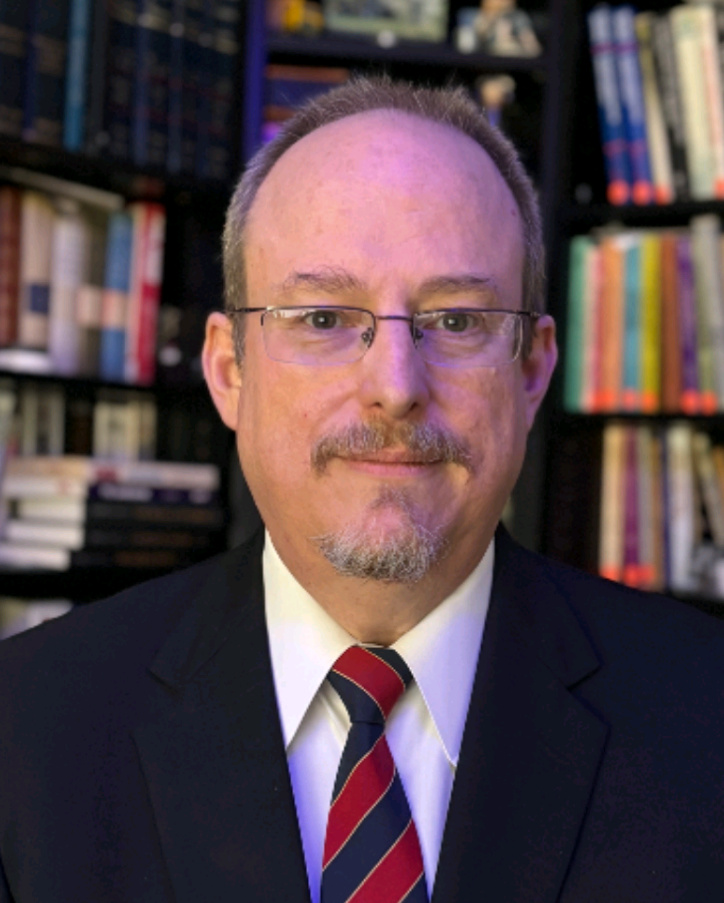
How Electromagnetism and Quantum Mechanics Work, and Where Physics Went Wrong
Hans G. Schantz
nou Systems, Inc.
ABSTRACT
This talk presents the central thesis of the Fields & Energy Project: electromagnetism is not best understood as the action of a single entity, the photon, endowed with the mutually contradictory properties of localized particle and non-localized wave. Instead, electromagnetic phenomena emerge from the interaction of two distinct elements: spatially extended fields that behave as waves, and energy that, in the quantum limit, is transferred in discrete amounts. Fields guide energy; energy does not constitute the field.
Through examples drawn from fields and their interactions, antenna theory, and atomic emission and absorption, this talk demonstrates how the fields-and-energy model provides a conceptually coherent and technically productive framework. This perspective clarifies long-standing puzzles associated with radiation reaction and wave–particle duality and connects Maxwellian theory, quantum emission and absorption, and engineering practice within a unified narrative.
The broader aim is to recover conceptual clarity in the foundations of physics, to reestablish continuity between classical and quantum descriptions, and to examine the historical and philosophical developments that shaped modern interpretations. By restoring a disciplined distinction between fields and energy, the talk argues for a simpler and more intelligible account of electromagnetic processes—one capable of unifying principles across physics and engineering.
BIO
Hans G. Schantz is an electromagnetic scientist, inventor, and author known for his contributions to antenna theory, ultrawideband and electrically-small antennas, near-field systems, and the fundamental physics of radiation and fields. As Senior Principal Technical Staff at nou Systems, Inc. and as Founder and Principal Scientist for, The Society for Post-Quantum Research, LLC., he continues producing innovations that bridge rigorous theory with practical engineering. Dr. Schantz is the author of The Art and Science of Ultrawideband Antennas and numerous technical papers and patents, and he is widely recognized for advancing the understanding of how electromagnetic systems store, radiate, and exchange energy. His recent work explores deep connections between classical electromagnetism, quantum limits, and the physical foundations of radiation, with an emphasis on restoring conceptual clarity and unifying principles across physics and engineering. As a science fiction writer, he brings a storyteller’s eye to his technical writing. Dr. Schantz earned his Ph.D. in theoretical physics from the University of Texas at Austin in 1995 for his theoretical study of how dipoles convert bound or reactive energy into radiation.
This talk is a summary of the material Hans is collecting in his three-volume, Fields & Energy trilogy. Book I: Fundamentals & Origins of Electromagnetism is available for sale, and he is currently serializing Book II: Where Physics Went Wrong on his Fields & Energy Substack.